KWT is remounting our new play HONOR, which had great success in February at the Chain Winter One-Act Festival. The ever estimable Ed Altman decided to ask ChatGPT what ‘it’ thought of our work and this was the answer.
WE BELIEVE THIS IS A FIRST. We’ve been waiting for the phone call from Guinness Book of World Records. This is the first time anyone used AI to get an endorsement for their Off-Broadway Play. Thank you, ChatGPT; a comp ticket is headed your way, just let us know how many seats you will take up.
But we do want a human audience when Alinca Hamilton, John Blaylock, and Ed Altman start performances on September 19th at the Gene Frankel Theatre and run on an Equity mini contract until October 6th. Tix are available now at this link
“Performance is woven into the fabric of our lives. It is natural and important to us as breathing. Performance is not merely a habit humans keep repeating across millennia, languages, and cultures. It is more fundamental than that. Performance is what it is to be human. It is the operating system for life.”
Theater is really one large act of listening: the director has to listen to the script—or at least should listen to it—just as the actors listen to it and to one another, and to the director, and just as the audience then listens to the whole performance.”
Did you know that The Rule Of 3 — the creative principle suggesting “a trio of entities such as events or characters is more humorous, satisfying, or effective than other numbers” had its origin with Aristotle?? Or was it Don Draper? Well, the Internet says Aristotle and Don Draper. Therefore, we are packing the latest news about Knowledge Workings Theater for you, its patient, merciful and perhaps unwitting subscribers, into 3 points for this post.
Here we go 1…2…3
# 1 HONOR Lives!
Some of you attended the very successful trio of performances of our latest play, HONOR. as part of The Chain Theatre’s Winter One Act Festival this past February. The responses of our capacity audiences inspired us. Grab a look at these unsolicited testimonials in this brief video.
Those kind and sincere reactions persuaded the entire HONOR team that we’d like to develop further this particular production. Good news: the enchanting and legendary Gene Frankel Theatre at 24 Bond Street in Manhattan, just down the street from The Public Theatre, will host HONOR for a three-week Equity Off-Broadway run in Manhattan starting in September.
For those of you who didn’t catch this one-acter in February, HONOR follows three high-ranking executives convened in a conference room to resolve a complaint with each bringing a different version of the concept of honor to that raucous and rollicking meeting. Our superb cast of Alinca Hamilton, John Blaylock, and Ed Altman rendered their wrangling over the meaning of that word — and its demands upon each of us — into an hour of compelling comic theatre. Information on tickets and exact show times will be forthcoming in our next email — unless you DID hit the unsubscribe button. In that case you’ll have to search the Internet to find out, an entity that can’t even decide whether the rule of 3 was created by Aristotle or Don Draper.
#2 Our TJW Script Is Up For Purchase
The digital version of our comedy The Jester’s Wife is up! Here’s the link to it: on the platform of our friends at Off-The-Wall Plays who are doing a swell job of publishing both digital and hard copy editions of our seven plays. Know a theater company that’s interested in putting on The Jester’s Wife? We’d love to see it produced in other locales especially Ireland. All substantial leads for such productions receive rewards ranging from dinner to lunch to breakfast in a restaurant approved by the Department of sanitation.
#3 or is it… (scary but simultaneously cheesy voice) Number 13!?!?
Given our founder’s circumstances (he’s now at the age where he’s been 12 years old six times), self-or production of some of our plays turned out to be the optimal method for our company; if by optimal, we mean that we couldn’t wait around for other people to produce them. When the festival run of HONOR ended, T.J. Elliott decided to jot down some of the the things noticed in those efforts and with a nod to one of his favorite poets, Wallace Stevens, entitled the series 13 Ways Of Looking At Self Producing. Installment number 10 will be out in the next few days and you can view all of them through the links at our website here.
Thanks so much for reading this update. And don’t forget we’d like to read your updates as well. Seriously, if there’s something going on in your world to which we could add support just ping us and we would be glad to do so. We’re all in this together, aren’t we?
Based on the original illustration by Martine MacDonald
Below are all installments of 13 Way of Looking at Self-Producing. The buttons click through to Medium and they’re all relatively quick reads! We’d love your feedback and are always eager to talk more and help answer any questions. Best. – KWT
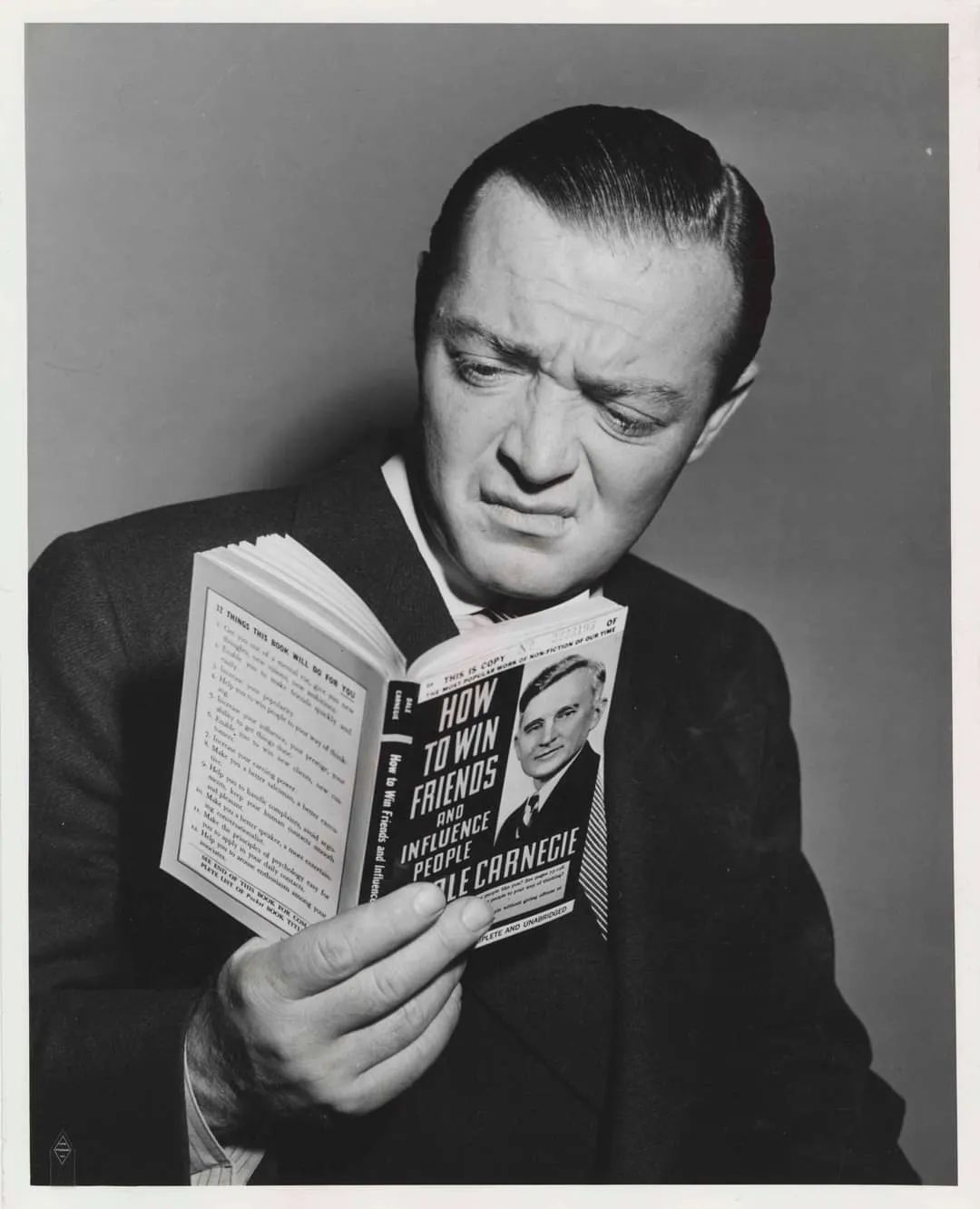
Peter Lorre will offer some tips on networking but first let’s talk money
#4 & #5 of 13 Ways of Looking at Self-Producing
Yes, it takes money to self-produce. Recognizing that reality straight off may influence the writing of your next play. Fewer characters? Simpler set? Greater imagination? The latter may be the answer as an unused church basement, library conference room, or even your living room becomes the stage you need. (This Wall Street Journal article is instructive on using innovative spaces to self-produce)
Paying for space is the largest fundamental cost involved in self-producing. The word ‘fundamental’ in this case denotes that while other choices specific to your show — using Equity actors, requiring expensive props, undertaking a significant marketing campaign — may incur costs, space (and whatever it costs) represents an indispensable element. Even if the space happens in the ether of a Zoom presentation, there will be expenses; e.g., a Zoom 99 seat license now goes for hundred $70 a year, lights for everyone’s ‘station’, microphones, etc.. (Yes, you can work outside under the sun, ‘the eye of heaven,’ or even ‘the inconstant moon’, but such alfresco arrangements may still carry outlays in the form of permit fees or rental of necessary equipment; space is still your fundamental expense in self producing.)
This reality (along with other realities described in the first four entries in this series, which can be found here) pertains to many other creators as well; painters, composers, and dancers all need studios albeit of different kinds. Free venue? It’s possible, but our experience is that such spaces are harder to find than ever and when you do come across one they bear many restrictions including being already much in demand from other good people. (At the end of this series, we’ll provide our guide to spaces in NYC at the moment, it’s a list that changes all the time.)
So, back to money. One of the most helpful books that we read over the course of our first few productions was Workshopping the New Play by George Sapio. While self-producing is not the specific subject of that book, many of the lessons that George imparts are relevant. Therefore, money arises as a subject within its first pages. George acknowledges that, “meeting and cultivating sponsors… Is the hardest part. Somebody’s gotta pay for all this [the elements of a workshop production]…” He goes on to talk about the community you establish for your theater and the specific work of researching and writing grants, which he notes is “the lifeblood of any theater.”
A belated confession: our vision of self-producing does not include making a profit. In fact, while there have been instances where breakeven was the final result they have now become less frequent. Okay, rare. Extinct? Welcome asked someone said hope is not a strategy come on well we might hope for the most fortuitous circumstances to envelope our efforts we go into each one of these productions with the idea that the enterprises of making theater and making money seem to have an aversion to each other. That’s right: hidden within these thirteen ways of looking at self-producing is the way that expects the project to take a loss. Two sayings of the great playwright Robert Anderson come to mind: the first from an interview that he gave in 1966 was that “I have always felt it was too bad that you could make a killing, but not a living, in the theater.” The second saying adorned a sign over his desk in his Manhattan apartment and read “nobody asked you to be a playwright.”
So, given that the answer is that the money will go and go, the question for anyone who is self-producing is where will the money come from? Before trying to answer that, you need a realistic budget. At a minimum, it will cover the following items although the amount next of them might be zero because you already have them, or you’re playing that role, or there’s some sort of in-kind donation from which your production can benefit: Rehearsal Space, Performance Space, Cast compensation (reading — rehearsals & performance), Rehearsal Assistant, Production crew, Costume/Set/Lighting Designer, Stage Manager, Liability Insurance, PR/Marketing consultation, Graphic design, Printing of programs, Printing of postcards and posters, Email blast and social media, Set materials, Props, Props/Set storage, Basic transportation, Opening night/hospitality. In my case, I left out the items of Playwright and Director, but three of our productions did have directors and only one of them, John Clay for our first production, Alms, worked gratis. probably because we’ve known each other for over fifty years. At least, I hope that’s the case and John isn’t waiting for a check.
There were two critical sources for me when I was looking for guidelines as to the budget we would need to self-produce. The most important of these was a workshop that the late great Marjorie Bicknell who was such a magnificent figure in the Philadelphia area Dramatists Guild community (which includes such notables as the Philadelphia Dramatists Center) arranged as a full-day session he workshop led by Seth Rozin, producing artistic director of InterAct Theatre Company. The other source was material from the very generous folks at Creative Capital who have online at this link “a sample budget for moving image art projects, including theater, and dance.”
While our on stage productions produced revenue, such sums arrive both after-the-fact and usually below the amount of expenses. In other words, we have NOT made money from our shows, but that was never our goal. We would like to lose less so we can make more theater. Our most successful efforts with getting money for productions were for the payment of our actors. Several times we used GOFUNDME mechanisms with the explicit condition that all dollars pledged would flow directly to the members of our cast. Our audience members were so generous that when we did KEEPING RIGHT during the pandemic, we had good reason to think that our cast might’ve been the best paid stage actors around even though that was mostly because nobody was getting paid to be on stage during those horrible months. Here’s the proof:
Another money method encountered but not used by us in our self-producing journeys was some companies getting everybody to work for free. We had no quarrel with that mode, but in our case our companies mission statement stipulates that creative folks will receive compensation for their efforts. The position is not so much high-minded as it is practical: if our company is about helping theater professionals to develop then they need some scratch so that they can keep on being theater professionals.
Consequently, we have had to look for money to sell produce from private sources thus far. And while those resources cannot keep our enterprises moving ahead forever, so far there are another people who believe in what were doing to allow us to keep on keeping on.
One of the real benefits of being in New York City is that there is a thriving community from home you can gain both learning and encouragement. Part of the learning is the intricacies of the grant process, which ends up being the money lifeblood for many productions. Look for grant opportunities such as the Ventrous Fund, which “make grants to fund the production of audacious, irreverent new plays.”
Alternately, the money can come in the form of coproducing or sponsorship. Creative Capital, mentioned above, has just opened up again applications for new arts projects and that includes plays. Check out opportunities (when unfortunately they infrequently arise for cooperation to self-produce such as at Players Theater. Finding out about such opportunities — grants, sponsorships, supporting arts organizations, and even possible ‘Angels’ — leads us to our 5th of 13 ways of looking at self-producing: Networking.
The word ‘networking’ emerged in 1976, but purposeful connecting is an ancient art
Claudia Haas represents one of the best examples of inspired but simple networking in her account of trying to make theater live during Covid. She went online and as related in The Dramatists Guild Magazine, invited “us to take a walk, to come out and play, to write a ‘walking play’. In the space of a month, 28 playwrights submitted their short plays to create the collection.” Some of them probably knew each other already, but I’m betting that their networks expanded significantly from this initiative I’m disappointed when playwrights are brought together for something such as a festival and there isn’t a concerted effort to get them to network, to connect, support, and learn from each other.
As Claudia put it, “I thought about all these playwrights I know who were walking their neighborhoods to combat the sameness of being in lockdown. In January 2021, I just threw the question out on Facebook, “Anyone want to devise plays based on their daily walks?” The answer was, “yes!” Who knew that the winter-blues, lack of vaccines, and inability to go anywhere could inspire creativity? The playwrights knew.”
As the DG noted, “For many playwrights, self-producing in the age of COVID (became) a necessity, made possible by ever- expanding social media. Self-producing is not a new idea, and it has always been essential for shaping the edges of theatre, inviting in the fringe elements, welcoming radical writing, making a home for experimentation.” But Covid was not the prerequisite or the now dulled stimulant for self-producing and the networking that makes it more feasible. As Haas noted, “Before COVID, I saw theatre taking place in garages, in backyards, and in parks. I think that sort of self-initiated theatre will not go away. It’s cost-effective because there is no traditional scenery, there are more flexible spaces, and because it is so unexpected, it builds community. With only a small number of theatres in each country willing to do new works, playwrights have turned to imaginative ways to bring new works to an audience.”
What that means for the self-producing playwright is that you have to reach not just the friends of friends but the next circle out of potential acquaintances to gain collaborators (and audience members.) For our most recent production, we gained our scenic, costume, sound, and lighting designers from this kind of networking. And our house manager too! They all supplied superb work and now they provide further rings and nodes to our network.Don’t let your self-production turn into a ‘clone show’ by taking on too many roles or failing to delegate effectively; i.e., making all members of the team mere order-takers. Such a stance will not only exhaust you, but also deprives you of the kind of diverse opinions that enrich any work. If the plan is to decide and do everything yourself, then it’s likely a bad plan for theater. And one thing you definitely shouldn’t do by yourself is figure out where you’re going to get the necessary resources to stage the play. Networking and money overlap in this journey to self-production. It’s not that you’re going to go out hat in hand (does anyone still wear a hat?) Asking friends and family for donations — or if you like investments. It’s more a matter of talking about why it’s important for you to make theater and getting others to offer ideas about how that can happen. If your experience is anything like ours, you’ll be pleasantly surprised on many occasions and wryly resigned to the downside of human nature the rest of the time.
# 6 in 13 ways of looking at self-producing — Creating Community
LOOK # 6 Community After the experience of mounting a full Off-Broadway production with The Jester’s Wife last October, I initially wrote these 13 Ways of Looking at Self Producing with the hope that the Dramatists Guild would select the piece for its magazine. But they passed; no harm done as it was neither my first rodeo nor my first rejection. So, once my colleagues and I had finished with our somewhat unexpected but delightful run of HONOR as part of The Chain Theater’s Winter One-Act Festival putting this outpouring up instead as a series on a variety of platforms — Medium, Substack, Facebook, Threads, LinkedIn, Instagram, even Twitter, oops, the platform now known as X — seemed like a good idea. An unexpected serendipity is that relevant references keep appearing. The Gothamist and Wall Street Journal articles, and now an interview with Ralph Fiennes to enrich this Look # 6: Self-Producing As Community Building. Peter Marks conducted a recent interview with Fiennes on the occasion of the production of “Macbeth,” co-starring Indira Varma and directed by Simon Godwin, about to open at the Shakespeare Theatre Company. Fiennes in talking about why he’s excited to be in a play again after all of his superb film work singled out as a differentiator between the experiences “that sense of community that you get in a stage production.” That statement resonated for me on several levels:
Self-producing is about creating community.
The kind of community in self-producing differs from a more traditional production.
The benefit of this particular kind of community that this famous and accomplished actor notes is the same for all of us no matter our length of experience or lack of prominence.
But first, let’s remember that some aspects of self-producing are about community joining rather than building. There are venues to facilitate collaboration including among your fellow playwrights. For our work, given that we are mainly a New York company, The Alliance Of Resident Theaters has been extraordinarily valuable as both resource in knowledge and subsidized rehearsal space as well as a source of networking opportunities through various round tables that they sponsored. A.R.T. for New York theater producers, directors, and actors is very much a community. For me, The Dramatists Guild has proved an equally important resource — even if they did turn down my article!. One particular area of their resource directory pertinent to this installment is the section on community engagement. There are many arts centers and alliances included there that can prove helpful to various aspects of self producing. Groups on Facebook especially the Dramatist Guild regional groups and informal associations such as The Playwright Connection and the NYC Playwrights Group. While their focus is not on self-producing, there are many people there to answer questions and offer encouragement about every aspect of playwrighting. Another avenue of community joining is the possibility of Co production where cost sharing occurs with an existing theatre company. That is how we managed to come out of the pandemic with a live stage performance at the esteemed Broom Street Theatre in Madison WI. Are their theatres that might be open to co-producing? Yes, we get excited about companies like 9Thirty Theatre that invite submissions of new scripts form March to May, but there may be other companies with space or other resources that need to find like-minded artists in order to make something happen in the short term. But when it comes to community building as part as your self producing, then the burden is upon you to start that formation, to be the catalyst. Community depends to a certain extent upon commonality and in the case of self producing, that commonality is performance. The wisdom of Declan Donnellan in his book The Actor and the Target and other writings provides a touchstone for me as a playwright and as a director. But Declan and his colleagues at Howl Round Theatre also can tell us a great deal about the building of community. In his latest book, Declan offers insight about performance as this cornerstone of self producing: “performance is woven into the fabric of our lives. It is natural and important to us as breathing. Performance is not merely a habit humans keep repeating across millennia, languages, and cultures. It is more fundamental than that. Performance is what it is to be human. It is the operating system for life.” In order for performance to become production, context is required, a space must be built in which the proper collaboration can occur. The repetition of self producing over eight productions reinforced in me the importance of sharing the goals that are held both jointly and individually. In many instances, we auditioned and then cast actors or selected technical artists whom we were meeting for the first time. Taking the initiative to orient those new colleagues to what you are trying to achieve is necessary but insufficient. If it’s going to be a community, then you have to find out what they want out of the experience. Will everyone be able to tell you explicitly or accurately why they have shown up to be a part of this production? Of course not, and that’s why it’s an ongoing conversation. Some of this interaction is basic as this outline from Pioneer Drama Services suggests: the most important question for me is, “how do you like to work?” (Pioneer also provides an idea of a community contract, which may appeal to some readers.)
Sometimes, we have framed this as an appreciative inquiry, and indeed the entire production process could be seen as a collective inquiry. Asking everyone to describe their ‘peak experience’ in putting up theater not only enlightens as to similarities and differences, but also gives guidance as to how to move forward as a community rather than just a collection of individuals. Some readers may protest that what is said here about community is true or should be for all theater productions, and that is a fair assessment. However, some productions are still run in a hierarchical fashion and that won’t work as well in self-producing. That’s why establishing community is even more critical for self-producing. Why? In a previous installment, we pointed out that the term ‘self-producing’ constitutes a misnomer: ain’t no way you can get up a significant piece of theater completely on your own. Therefore, since the structures of traditional theater are not available to you in this mode the community that you and others billed for your project becomes even more important. So what does work? It takes clear, specific, and incentivized objectives to focus and motivate teams. That’s why we recommend that as a follow-up to the appreciative inquiry suggested above that everyone agree on what they are trying to get out of this experience. The late Harvard teacher and theorist on teams, J Richard Hackman found in his research that simply specifying the ends — what you’re trying to create — was not enough; a successful experience required being explicit about the means — how this group of people were going to produce those ‘ends ‘. This finding should not be taken to mean that absolute harmony is a requirement. Hackman — whom I was lucky enough to speak to toward the end of his life — insisted that conflict, when well managed and focused on a team’s objectives, can generate more creative solutions than one sees in conflict-free groups. So long as it is about the work itself, disagreements can be good for a team. Indeed, he told me that he and his colleagues found in their research on symphony orchestras that slightly grumpy orchestras played a little better as ensembles than those whose members worked together especially harmoniously. In building this community for self-producing, diversity matters in both the broadest and more current senses of that word. It’s better to consider what skills are needed rather than just who do we know. This takes us back to the previous installment and the strength of weak connections, the advantages of getting out to the friends of your friends will get you to people who can do the tough things that need to be done Christopher Massimine in his Medium piece on starting a theater company addresses the issue of inclusivity as “a core value of any successful theatre company. This means that your company must be inclusive of all people, viewpoints, ideas, and cultures. You should also be inclusive of race, religion, and sexual orientation.” We found this to be critical to success. Do we always achieve this state? No, and it is in that failing to do so that learning about how to approach the next production occurred. Our communication and collaboration. That’s why those topics will be number 7 in our 13 ways of looking at self-producing.
Ed Altman (Don Troy) gets attention by ignoring Alinca Hamilton (Ronnee Emerson) and John Blaylock (Ludwig Cade) in HONOREd Altman (DON) challenging John Blaylock (LUDWIG) to debateAlinca Hamilton (RONNEE) trying to find a solution to this conflict over HONOR
With Lunar New Year celebrations, Valentine’s Day elaborations, and Ash Wednesday genuflections in the rear view mirror and the opening of our new play, HONOR, looming, I am presuming upon your screen time and the space in your already crowded inbox to recommend to you the work of three extraordinary actors: Alinca Hamilton, John Blaylock, and Ed Altman. Writing, directing, and producing seven plays in 5 years has taught me many lessons, but the most important one is that actors bring a play to life; text is foundation; acting provides the actual structure, and acting of that text is what people come to see and hear. The new existence of a play created by actors’ actions can be astonishing, but that effect comes from their hard work and high talent. Not all actors (and not all playwrights, of course) are equal.
My extraordinary luck has brought me actors who astonish me with their ability to enliven – and sometimes usefully alter – the words I (and in four of those plays my dear friend and co-playwright Joe Queenan) have written. Astonishment, gratitude, humility, joy are all reactions that I have had working with the three actors in our latest play HONOR, which will have performances at The Chain Theatre in Manhattan February 16th, 21st, and 24th. Alinca, John , and Ed spark vivid and provocative associations as they parse and pronounce their own definitions of that title word: Honor.
To experience their dynamic work, you can purchase a ticket using the discount code ‘HONOR‘ at this link. But even if circumstances preclude your attendance, I wanted as many people as possible to know about these three actors in this play. They make theater live!
Thanks for reading this blog post. I promise to read yours anytime you feel moved to hoist one.
“Human life is not a struggle in which rivals contend for prizes. It is a voyage that brothers make together: where each employs his forces for the good of all and is rewarded by the sweetness of mutual benevolence, by the pleasure that comes with the sentiment of having earned the gratitude or the esteem of others…
Marie Jean Antoine Nicolas de Caritat Condorcet, On the Nature and Purpose of Public Instruction (1791)
And speaking of BROTHERS
Writing before the public should have a purpose. It could be just to entertain or to inform. Much of what I’ve been writing over the last several weeks and probably over the next several days promotes the work of our team putting on honor at the chain theater. But today – – the convergence of Mardi Gras, the Year of the Dragon, and Valentine’s Day Eve – – prompts me to write with a different purpose: to entreat all of us to share our gratitude for those who made us as much of what we are. Having practiced this expression of open gratitude previously, I can attest that it is an excellent exercise: remembering that anything we have achieved is due to the care and encouragement of so many others puts a good leash on enthusiastic egos and persuading our younger friends and relatives of the importance of such homage is good for our society. None of us should fall for the myth of the self-made person. Too much individualism unravels the cords of society and unstrung our communities and families fall apart. And so I want to write with the purpose of extolling my brother John.
Yes, that’s me on the left at my confirmation: John C. was my sponsor and my mom Mary Connaghan Elliott and sister Irene Elliott were added to the photo for beautification considering how I looked.
Yes, this post is yet another thank-you to my brother, John C. Elliott (he never forgave my mother for the Cornelius), the eldest of the five Elliott boys, whose 80th birthday we would have celebrated with him today had John not died far too soon in October of 2022.
Older brothers can give you courage that no one else can impart. Knowing your kinship, their approval, even their criticism, can make you believe more strongly in yourself. When someone as wise and impressive as John takes the time to guide you the steering avoids dangers and dead ends. But John did even more than that. When it came to my once and future profession of playwrighting and directing, John bankrolled our first Off Broadway show in New York, Captive Audiences, and then even after death provided resources that allowed the full mounting of our last play, The Jester’s Wife.
John giving one of the next generation ‘the stare’
He was much more than my brother. He was a soldier and a philanthropist. Most importantly, he was a fine father and grandfather as well as an innovator in business and finance.
I offer my celebration of someone dear who helped to make me whatever I am today in the hope that others will provide their own testimonials. We can learn but more fundamentally we will remember that we should be that helper for others, that encourager and enabler of what it takes to build a life. In doing so, we follow the very good advice contained in one of my go-to quotes:
Silent gratitude is not much use to anyone who had done a lot for you.
Gladys Bronwyn Stern, from He Wrote Treasure Island: The Story of Robert Louis Stevenson